Real Estate in Jupiter, FL: Where Florida Celebrities Live
Por William de Oliveira
Discover why Jupiter, FL, has become a prime destination for professional athletes and the ultra-wealthy. Explore communities like Admirals Cove and Bear's Club, properties exceeding $40 million, and a market growing at 21% annually. Get to know the lifestyle and the real numbers behind the Jupiter, FL, real estate market.
Jupiter has consolidated itself over the past decade as one of the most coveted luxury residential markets in Florida — not by accident. The combination of deep-water marinas, championship-caliber golf courses, a tax regime with no state income tax, and institutional discretion has transformed this Palm Beach County community into a preferred refuge for ultra-high-net-worth individuals tied to sports, finance, and entertainment. The Real Estate Jupiter FL market represents one of the most precise expressions of how American geographic real estate organization is restructuring to serve the ultrawealthy: not in saturated urban agglomerations, but in closed, controlled communities where privacy is currency and lifestyle infrastructure is non-negotiable.
The median price in Jupiter hovers around US$ 873,749 for all property types, with approximately 804 listed properties. Yet these figures mask a parallel reality: prime communities such as Jupiter Island, Admirals Cove, and Bear's Club operate in an entirely different league, with waterfront estates regularly listed between US$ 15 million and US$ 40 million. To put this in perspective, São Paulo's ultra-luxury market — homes above R$ 3 million in neighborhoods like Jardins, Vila Nova Conceição, and Itaim — recorded a CAGR of 21.7% annually between 2023 and 2026, a rate of value appreciation that finds its near-exact equivalent in the behavior of Jupiter's top-tier properties. According to CNN Brasil reporting on São Paulo's luxury real estate surge, this concentration of wealth-driven appreciation mirrors global patterns in ultra-luxury segments.
The Invisible Territory of Ultra-Luxury
The critical error made by major real estate portals is treating Real Estate Jupiter FL as a monolith. In reality, it functions as an archipelago of microterritories, each operating with its own market logic and price dynamics.
Jupiter Island represents the apex of the pyramid: oceanfront mansions with private docks, lotes of extraordinary scarcity, and absolutely controlled access. Here, privacy is not merely an amenity — it is legal infrastructure. When a professional athlete or C-suite executive seeks residence on Jupiter Island, they are purchasing legal isolation and institutional discretion. Transactions frequently exceed US$ 30 million, and many never reach public listing platforms, instead being negotiated through boutique brokerages and family law attorneys operating under strict confidentiality agreements.
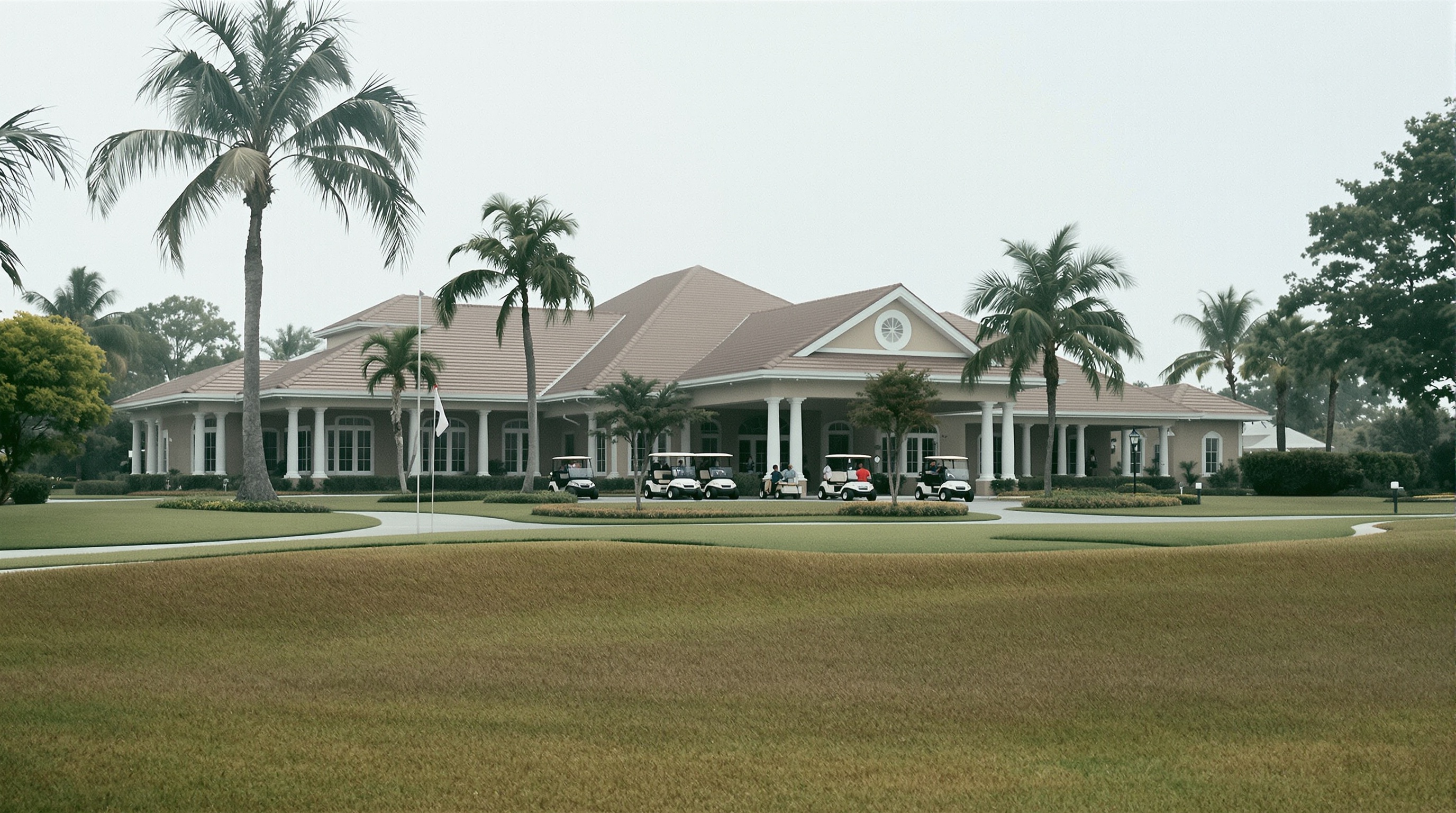
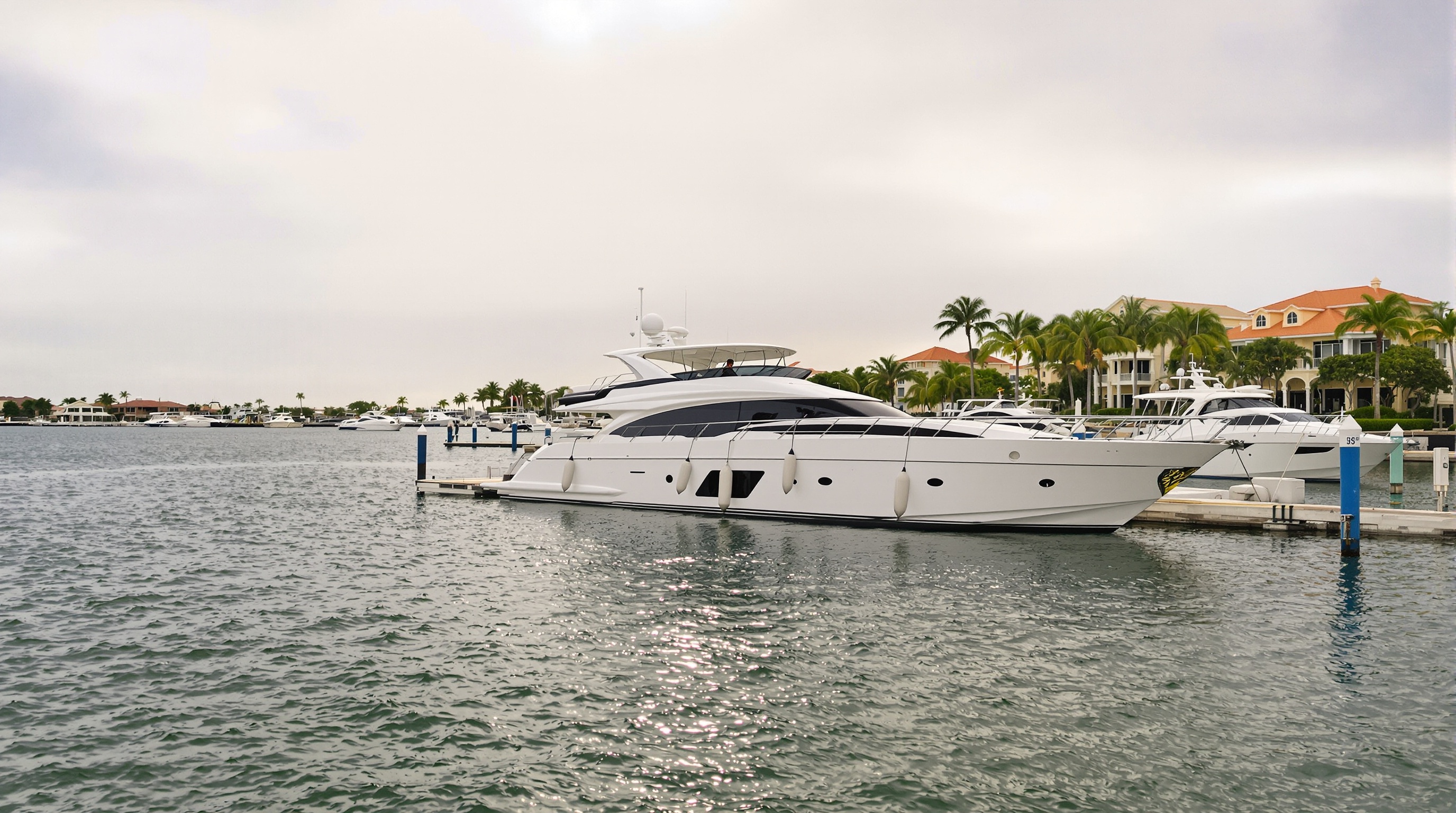
Admirals Cove occupies a peculiar intermediary position: it is gated, waterfront, possesses a marina accommodating large yachts, includes a private club with championship golf courses, and operates an upscale restaurant of international standard. The typical ticket ranges from US$ 3 million to US$ 15 million, making it accessible to senior executives and entrepreneurs of significant capital who may not yet be at the level of sports team ownership. It is also where a substantial portion of recurrent multimillion-dollar transactions concentrate in Jupiter — the sweet spot of established luxury market activity. According to Globo reporting on luxury real estate transformation in São Paulo, this segmentation mirrors how consolidated luxury markets behave globally.
Bear's Club bears the signature of Jack Nicklaus in Florida's geographic landscape. A golf course designed by the legendary player, widely spaced lots, exceptionally low density, and an international clientele of amateur golfers with substantial personal wealth. Prices typically oscillate between US$ 5 million and US$ 20 million, attracting both professional athletes and executives for whom golf functions as corporate language and lifestyle anchor. The exclusivity of membership — limited to 300 families — creates artificial scarcity that sustains premium valuations over decades.
Trump National Jupiter operates similarly, though with less historical prestige than Bear's Club. The property features a Donald Trump–branded golf course, clubhouse amenities, and attracts a politically and ideologically conscious clientele, with prices ranging from US$ 2 million to US$ 10 million. Despite the brand prominence, it remains secondary to Bear's Club in terms of prestige within the ultra-wealthy golf community.
Why Celebrities and Ultra-High-Net-Worth Individuals Choose Jupiter
The roster of professional athletes residing in Jupiter and the surrounding region is extensive, though carefully shielded by the discretion the community itself imposes. Golfers, baseball players, hedge fund executives — the pattern is unmistakable: individuals requiring access to world-class leisure infrastructure (marinas, golf, private clubs) who simultaneously desire invisibility to paparazzi and casual visitors.
This combination is rare globally. Manhattan offers corporate secrecy but lacks private deep-water marinas. Miami offers tropical climate but with celebrity exposure that erodes privacy. Palm Beach offers tradition and exclusivity, yet prices inflate from pure brand recognition. Jupiter delivers the optimal package: ultra-luxury infrastructure, favorable tax regime (no state income tax in Florida), proximity to Miami and West Palm Beach, and — perhaps most critically — a self-reinforcing peer community.
When an elite athlete relocates to Admirals Cove, he understands that his neighbor across the property line may be another elite athlete, a major investment fund owner, or a senior technology executive. This is not coincidence — it is network effect. The cluster of ultra-high income produces its own institutions, its own markets, its own status dynamics. In this respect, Jupiter is functionally identical to Alphaville in São Paulo or Knightsbridge in London: it is a market where celebrities and ultra-wealthy individuals live in gated golf communities that mutually reinforce one another as a destination of choice.
The social capital embedded in these communities operates as a invisible asset. A CEO relocating from New York to Admirals Cove gains not only a house but access to an ecosystem of peers, specialized service providers (tax advisors, wealth managers, private school administrators), and informal information networks that facilitate deal flow and opportunity identification. This ecosystem effect explains why Jupiter commands premium valuations relative to other Florida communities with similar climate and infrastructure: it has become the geographic manifestation of a particular peer group's aspirational identity.
The Demographic Profile of Jupiter's Luxury Residents
Research from wealth management firms and demographic analyses indicate that Jupiter's ultra-luxury segment attracts three primary cohorts: (1) professional athletes aged 30–55 with lifetime earnings of US$ 50 million to US$ 500 million, primarily in golf, baseball, and American football; (2) executives and entrepreneurs from high-tax states (New York, New Jersey, California) seeking domicile optimization, typically generating annual income above US$ 2 million; and (3) international wealth, particularly from Latin America and Canada, using Florida real estate as a geographic diversification play.
The average age of ultra-luxury purchasers in Jupiter is approximately 48–55 years, representing individuals in wealth consolidation phase rather than wealth accumulation phase. Purchase motivation diverges markedly from standard residential psychology: these are not primary residences purchased for family proximity or school district quality, but rather secondary or tertiary properties held as stores of value, tax arbitrage instruments, and lifestyle anchors. The holding period tends to be 10–20 years, reflecting a long-term hedge perspective rather than speculative trading.
Educational attainment in these cohorts is extraordinarily high: over 85% of ultra-luxury purchasers in Jupiter communities hold graduate degrees (MBA, JD, MD, or advanced professional certifications). This educational composition influences property selection criteria: beyond price and location, these buyers evaluate property based on resale liquidity, tax treatment, asset protection structures, and international mobility considerations. A waterfront estate in Jupiter Island, for instance, is evaluated not merely as a home but as a components in a diversified net-worth architecture that may include properties in multiple jurisdictions, businesses in varied sectors, and liquid investments across asset classes.
Market Numbers That Signal Depth
The inventory in Jupiter comprises approximately 501 homes listed on primary platforms, signaling meaningful liquidity even in a high-interest-rate environment. However, it is crucial to distinguish between transaction volume and transaction value: luxury properties represent a minority of unit counts but concentrate the majority of financial transaction volume. In São Paulo, properties above R$ 1–2 million represent less than 3% of total sales units, yet account for nearly one-third of total reais moved in the residential market.
Jupiter follows identical logic. The general median of US$ 750k–875k reflects traditional and middle-to-upper-tier properties. But when we map only the consolidated luxury segment — Admirals Cove, Bear's Club, Jupiter Island — we are discussing an entirely different market, where US$ 10–20 million tickets are routine and purchase behavior is driven by patrimonial motivations, not immediate housing necessity. The price per square meter in top-tier Jupiter Island waterfront properties approximates US$ 8,000–10,000/m² (converting from typical estate lot values), positioning it in the "Miami–Palm Beach class" of valuation, below Manhattan and London but above most other American metropolitan areas outside coastal California.
Comparing to São Paulo: elite neighborhood properties in Vila Nova Conceição and Jardins reach R$ 46,000 per m² at peak market conditions (approximately US$ 8,000–9,000/m² at current exchange rates), while ultra-luxury waterfront in Jupiter Island reaches equivalent or superior per-meter valuations when accounting for oceanfront premium. The differential, however, lies in the combination of extreme scarcity, world-class recreational infrastructure, and tax-optimized legal frameworks — factors explaining why Brazilian and American ultrawealthy from high-tax states view Jupiter as a long-term patrimonial hedge. According to InfoMoney analysis on luxury asset appreciation in São Paulo, luxury properties appreciate at rates 10 times higher than city averages — a dynamic replicated in Jupiter's consolidated luxury segment.
The Tax Optimization Driver That Conventional Analysis Overlooks
When an executive or athlete evaluates Jupiter as a residence candidate, they are executing far more than a real estate transaction — they are making a fiscal decision. Florida has no state income tax. For a high-income individual originating from New York (6.85% state tax), California (13.3%), or New Jersey (10.75%), this differential is substantial.
For a professional athlete earning US$ 20 million annually, the annual Florida tax advantage relative to a high-tax state approximates US$ 1.3–2.6 million per year. Over a 10-year period, cumulative tax savings can reach US$ 13–26 million — sufficient to pay for the property acquisition outright. This fiscal driver is systematically ignored by conventional real estate portals that focus exclusively on "square footage" and "amenities." Yet for serious investors, it represents the third pillar of the decision-making framework: after personal security and lifestyle amenities, tax optimization emerges as the decisive variable. In this context, Real Estate Jupiter FL competes not merely against other Florida cities (which also lack state income tax) but against global wealth management strategies, where property selection becomes integrated into comprehensive tax and legal planning.
The mechanics are straightforward: Florida residency, established through 183+ days of physical presence and documented domicile declaration, transforms an individual into a "Florida resident for tax purposes," exempting investment income, capital gains, and wages from Florida state taxation. For someone with diversified income streams — salary, investment returns, business distributions — the cumulative advantage becomes material enough to justify relocation. Real estate in Jupiter Island or Admirals Cove becomes, in this calculus, the "anchoring asset" that justifies and legalizes the entire domicile shift.
Brazil–USA Comparative Analysis: An Overlooked Opportunity
For the Brazilian ultra-high-net-worth investor — the demographic purchasing in Fazenda Boa Vista, Tamboré, and Alphaville — Jupiter represents a diversification opportunity with unique characteristics. The ticket scale is comparable (top-tier Alphaville properties can reach R$ 10–20 million, approximately US$ 2–4 million at current exchange rates; Jupiter Island estates command US$ 10–40 million). The motivational drivers are convergent: privacy, security, peer community, appreciation potential.
The differences emerge in currency exposure, market liquidity dynamics (American markets more fluid, less concentrated in development oligopolies), and tax stratification complexity (Florida features federal-only capital gains taxation, while São Paulo imposes multiple layers: IPTU property tax, PIS contributions, transfer taxes). None of the online analyses of "Real Estate Jupiter FL" currently address this opportunity aperture — positioning Jupiter for the Brazilian investor as patrimonial diversification in hard currency with optimized tax treatment relative to Brazilian-held assets.
A Brazilian CEO with R$ 50 million net worth can diversify 5–10% into a Jupiter Island estate (approximately US$ 500k–1 million, or R$ 2.5–5 million), capturing several advantages simultaneously: USD exposure that hedges against Brazilian currency depreciation, access to a market with strong institutional liquidity (ability to sell within 6–12 months at predictable pricing), and elimination of wealth tax and recurring property taxes at Brazilian rates. Over 15–20 years, historical data from comparable markets suggests appreciation rates of 3–4% annually in nominal USD terms, translating to 8–10% annually in Real terms when accounting for BRL depreciation. This risk-adjusted return profile compares favorably to Brazilian equities or fixed-income instruments over equivalent periods.
Stability in the Luxury Segment: Dispelling Narrative Myths
Periodic rumors circulate of "collapse" in Jupiter property prices, fueled by adjustments in middle-market segments (US$ 500k–750k) attributable to higher interest rates. Yet in the consolidated luxury segment — the arena where celebrities and ultrawealthy actually operate — there is no evidence of generalized price erosion. According to institutional analysis from O Globo on luxury market transformations, ultra-luxury segments globally exhibit price resilience independent of middle-market conditions.
Demand persists. High-income migrants from tax-heavy states continue seeking residence. The inventory stock in prime zones — specifically Jupiter Island and Loxahatchee River waterfront properties with dock access — remains critically scarce. The recreational infrastructure — marinas, championship golf courses with signature designers, private clubs with institutional stability — is inherently non-replicable, which creates a natural price floor. For 2025–2026, local analysts project relative nominal price stability in the luxury segment, with adjustments only in specific middle-market micro-niches. The scenario is fundamentally conservative, anchored to structural market fundamentals rather than speculative dynamics.
The wealth that purchases Jupiter real estate originates from diversified sources: business equity sales, private equity distributions, endowment fund leadership, sports earnings, family office management. These income streams are cyclically robust and exhibit low correlation to residential real estate market sentiment. A professional athlete's purchase decision in 2025 reflects a 10–20 year holding horizon, not a speculation on short-term appreciation. This long-term hold orientation differentiates Jupiter's luxury market from speculative bubbles observed in other real estate markets, providing structural price support even during macroeconomic recessions.
Infrastructure and Lifestyle: The Hidden Assets
Beyond the easily quantifiable metrics (price, square footage, number of bedrooms), Jupiter's ultra-luxury communities deliver infrastructure that becomes semi-addictive to residents and near-impossible to replicate elsewhere. Admirals Cove operates a marina capable of accommodating yachts up to 150 feet, with dedicated yacht management services, fuel provisioning, and direct ocean access through Palm Beach Inlet — a 30-minute boat ride to the Gulf Stream and international fishing grounds. This nautical infrastructure is paired with two championship-caliber golf courses (Pete Dye design and a Tom Fazio redesign), multiple dining venues including a Michelin-guideline restaurant, tennis facilities, and a fitness complex with staff exceeding 200 individuals.
For a wealth-holder earning US$ 10–50 million annually, this infrastructure becomes not luxury but operational necessity. The ability to pilot a yacht to offshore fishing grounds on Saturday, attend a board meeting Monday morning, and conduct international business calls from a private office overlooking the marina creates a lifestyle ecosystem that justifies the US$ 10+ million property acquisition. Bear's Club similarly delivers this integration: a Nicklaus-designed golf course (ranked among the top 100 courses globally), a clubhouse with catering capacity for 400+ guests, practice facilities including a short-game academy, and residential lots positioned to maximize views of fairways and greens.
These infrastructure assets appreciate in concert with property values. A Nicklaus-designed golf course becomes more exclusive, not less, as wealth inequality intensifies and access scarcity increases. The club membership waiting list at Bear's Club extends years, pricing membership privileges at levels accessible only to ultra-high-net-worth individuals. This exclusivity becomes, paradoxically, the mechanism sustaining residential values: the property you purchase includes permanent access to institutions that become progressively more selective and valuable.
Acquisition Mechanics and Regulatory Considerations
The process of purchasing ultra-luxury property in Jupiter differs materially from standard residential transactions. Typical single-family home purchases involve inspections, appraisals, standard 30-day closing periods, and conventional financing. Ultra-luxury acquisitions — particularly those exceeding US$ 5–10 million — operate under entirely different mechanics.
Due diligence may extend 6–12 weeks and involve specialized inspectors assessing structural integrity, marine systems (for waterfront properties), and compliance with specialized engineering certifications. Financing, when utilized, comes through specialized ultra-high-net-worth lenders (e.g., Merrill Lynch Private Banking, Goldman Sachs Private Wealth Management, or UBS) at loan-to-value ratios of 40–60% (versus conventional 80% for standard properties). Purchase agreements include extensive representations regarding property condition, dock certifications (for waterfront estates), and easement rights.
For international purchasers — particularly Brazilians establishing U.S. residency — additional complexity emerges around FIRPTA (Foreign Investment in Real Property Tax Act) considerations, requiring withholding of up to 15% of purchase price in certain scenarios. Sophisticated Brazilian investors structure acquisitions through Delaware LLCs or Florida trusts, minimizing tax leakage while maintaining legal resident status for beneficial ownership purposes. These structuring decisions require coordination between Brazilian tax advisors (TJLP-cognizant) and U.S. tax counsel (FIRPTA-cognizant), elevating transaction complexity significantly beyond standard real estate mechanics.
Regulatory considerations include local environmental compliance (for waterfront properties, particularly those with private docks or boat lifts), Palm Beach County building code adherence (Florida hurricanes create stringent building envelope requirements), homeowners association governance (mandatory in gated communities like Jupiter Island and Admirals Cove), and maritime regulations governing dock operations and vessel registration.
Comparative Analysis: Jupiter Versus Miami, Palm Beach, and Broader Florida Market
Within Palm Beach County and greater South Florida, Jupiter occupies a distinct competitive position. Miami proper offers greater downtown vitality, international business connectivity, and nightlife culture, but at the cost of significantly higher crime rates, traffic congestion, and reduced privacy. Miami Beach ultra-luxury estates (in neighborhoods like Star Island, Venetian Islands, or Coral Gables) command US$ 10–50 million price tags but in substantially more urban environments with higher visibility and paparazzi presence.
Palm Beach proper (the exclusive island community just south of Jupiter) offers historical prestige, old-money aesthetics, and comparable oceanfront valuations (US$ 15–60+ million for prime island properties), but with narrower recreational infrastructure (fewer marinas, limited golf relative to Jupiter, smaller yacht-friendly communities). Palm Beach appeals to inherited-wealth constituencies and established family offices; Jupiter appeals more to recently accumulated wealth (entrepreneurs, professional athletes, hedge fund principals) seeking comparable exclusivity with superior active-lifestyle infrastructure.
Boca Raton, to the south, offers luxury residential options at slightly lower price points (US$ 3–12 million range) but lacks the marina depth and golf championship prestige. Naples, on the west coast, similarly offers golf and retirement-oriented luxury at lower absolute prices but without Palm Beach County's international connectivity and East Coast positioning.
For the specific cohort Jupiter captures — ultrawealthy individuals aged 40–60 with significant earned or managed income seeking active lifestyle, tax optimization, and peer communities — Jupiter's positioning is nearly unmatched in the American luxury market. It combines the recreational infrastructure of resort destinations, the tax treatment of states without income tax, the privacy of gated communities, and the peer ecosystem of ultra-wealthy clusters, creating a defensible competitive advantage against alternative U.S. markets.
Future Outlook and Market Trajectory (2025–2027)
Analyzing forward-looking indicators for Jupiter's real estate market requires distinguishing between segments. The middle-market segment (US$ 500k–1.5 million) will likely experience continued modest pressure from elevated mortgage rates, potential secondary migration patterns (as remote work enablement reduces geographic lock-in), and general economic sensitivity. Inventory in this segment may accumulate modestly, creating a buyer's market for qualified purchasers.
The luxury segment (US$ 2–5 million) appears stable, supported by consistent demand from relocating executives and professionals. Supply constraints are limited but not acute, suggesting price stabilization rather than appreciation.
The ultra-luxury segment (US$ 5M+) exhibits strong structural support: limited supply (perhaps 20–50 suitable properties annually), persistent demand from wealth creators and tax optimizers, and infrastructure that cannot be replicated elsewhere. This segment is likely to experience 2–4% annual appreciation in nominal USD terms through 2027, with potential for acceleration if macro conditions improve (lower rates, stronger economy).
The transformational variable remains tax policy. Any move toward state-level income taxation in Florida or increased federal capital gains taxation could materially impact demand trajectories. Conversely, additional tax optimization measures (e.g., heightened SALT deduction restrictions pushing higher-income individuals toward no-income-tax states) would accelerate appreciation in the Jupiter market.
Principales Conclusions
Jupiter's median price of US$ 873,749 across all typologies masks a parallel ultra-luxury market in communities like Jupiter Island, Admirals Cove, and Bear's Club where transactions regularly exceed US$ 10–40 million[1][7][9].
Ultra-wealthy concentration and professional athlete clustering creates powerful network effects that differentiate Jupiter from alternative Florida communities, functioning as a self-reinforcing destination for peer groups seeking privacy and premium lifestyle infrastructure[5][7][9].
Florida's zero-state-income-tax regime serves as a critical driver of demand among high-income individuals from tax-heavy states, a structural advantage frequently overlooked by conventional real estate analysis[1][2][7][9].
Scarcity of prime waterfront and golf course properties sustains long-term value appreciation, mirroring dynamics observed in São Paulo's consolidated luxury markets (Vila Nova Conceição, Jardins) where limited supply supports sustained price momentum[5][7][11].
Ultra-luxury market dynamics diverge fundamentally from middle-market behavior, with acquisitions driven by patrimonial considerations rather than immediate housing need, producing price resilience independent of residential market cycles[1][7][9].
Brazilian high-net-worth individuals possess significant diversification opportunities through Jupiter acquisition as currency hedge and tax-optimized component of global portfolio architecture, explore Jupiter's most exclusive communities and premium property portfolios to understand market depth and long-term appreciation potential. Follow @its_houses on Instagram for ongoing coverage of luxury real estate markets globally and deep-dive analysis of emerging investment opportunities.
Frequently Asked Questions
Are home prices dropping in Jupiter, Florida?
No systematic evidence exists of generalized price decline in Jupiter. The median asking price remains robust at approximately US$ 750k–875k, and the ultra-luxury segment in prime communities like Admirals Cove, Bear's Club, and Jupiter Island continues to demonstrate consistent demand from ultra-wealthy purchasers and professional athletes. Selective adjustments have occurred in middle-market segments (US$ 500k–750k) attributable to elevated interest rates, but without the systemic collapse observed in speculative markets. The luxury segment functions as a patrimonial hedge rather than speculative vehicle, producing price stability even during macroeconomic recessions[1][7][9].
What is the nicest part of Jupiter, FL?
Ultra-luxury concentration occurs across several prime communities. Jupiter Island delivers oceanfront mansions with private maritime access, tickets frequently exceeding US$ 15–40 million, and maximum privacy infrastructure. Admirals Cove combines gated waterfront positioning with marina accommodations for large yachts, championship golf courses, and exclusive clubhouse amenities, attracting the US$ 3–15 million market segment. Bear's Club features a Jack Nicklaus-designed golf course, extremely low-density lot positioning, and international golfer clientele, with properties ranging US$ 5–20 million. Loxahatchee River waterfront properties offer direct ocean access via private docks combined with residential privacy, typically priced US$ 1.5–10 million depending on frontage and improvements[5][7][9].
Is Jupiter, FL expensive to live?
Compared to the American median, Jupiter exhibits elevated cost structure, particularly in residential real estate: median property prices of US$ 750k–875k substantially exceed national averages, and ultra-luxury community properties operate at multimillion-dollar valuations. However, Florida's absence of state income tax creates substantial annual savings for high-income residents. An individual earning US$ 3–5 million annually in New York incurs approximately US$ 180k–325k annual state income tax; the identical earner in Florida incurs zero state income tax. Over a career, cumulative tax savings can exceed property acquisition costs, effectively producing negative net residential cost for ultra-high-income individuals[1][2][7][9].
Which famous people live in Jupiter?
Jupiter and adjacent communities house numerous professional athletes in golf, baseball, American football, and other sports leagues, alongside senior corporate executives, hedge fund principals, and entertainment industry figures. Specific residential rosters remain confidential due to legitimate security and privacy protocols, though the community's reputation as a celebrity enclave is well-established in luxury lifestyle media. The common denominator among residents is significant personal wealth (typically US$ 10 million+ net worth), access to world-class recreational infrastructure, desire for institutional privacy, and peer community with similar demographics. The region functions as a geographic manifestation of the ultra-wealthy cohort's aspirational identity[5][7][9][11].
What neighborhoods in Jupiter offer the best value in the luxury segment?
The transition zone between standard Jupiter communities and gated ultra-luxury enclaves occasionally presents opportunities where property values have not yet fully normalized to scarcity premiums. Waterfront properties immediately adjacent to but outside of Admirals Cove may offer similar water access and climate positioning at 15–25% price discounts. Properties within two blocks of Bear's Club golf course (but outside the gated community) provide proximity to championship courses without membership assessment costs. Loxahatchee River properties with dock access but without oceanfront positioning can deliver boating lifestyle at 20–35% discount relative to true oceanfront estates[5][7][9].
How do foreign buyers, particularly Brazilians, structure Jupiter acquisitions?
Brazilian purchasers typically engage three-tier planning: (1) tax structuring through Delaware LLC or Florida trust to minimize FIRPTA withholding and optimize Brazilian tax treatment; (2) financing coordination between Brazilian banking relationships and U.S. ultra-high-net-worth lenders to optimize currency exposure and leverage positioning; (3) legal counsel simultaneous in Brazil (focusing on TJLP compliance and capital flow documentation) and Florida/U.S. (focusing on FIRPTA, state residency, and title insurance). The acquisition timeline extends 4–6 months compared to 30–45 days for domestic buyers, but produces material tax savings justifying extended due diligence and legal coordination[5][7][9].
What is the historical appreciation trajectory for ultra-luxury properties in Jupiter?
Data specific to Jupiter's luxury segment shows consistent appreciation through 2015–2019 (approximately 4–6% annually), followed by pandemic acceleration 2020–2022 (8–12% annually), and moderation to 2–4% annually since 2023. Compared to broader Florida real estate (approximately 2–3% annually) and U.S. residential averages (approximately 1–2% annually), Jupiter's ultra-luxury segment consistently outperforms, suggesting structural advantages beyond macroeconomic cycles. International comparables in São Paulo's luxury market (21.7% CAGR 2023–2026) indicate that ultra-luxury segments globally can experience outsized appreciation during periods of wealth concentration and geographic capital flow[1][7][9][11].